A Wisconsin winter can expose a stored boat to snow, ice, wind, moisture, debris, and repeated temperature changes. Both indoor and outdoor storage can be workable when the boat is prepared correctly, but they provide different levels of direct-weather protection, access, convenience, and cost. The best choice depends on the boat, the owner's plans, and the exact terms offered by the facility.
What does “outdoor storage” include?
Outdoor boat storage usually means parking the boat on its trailer in an open or fenced lot. Some facilities offer covered outdoor spaces with a roof but open sides. The lower overhead of a parking area can make outdoor storage less expensive, and some lots permit scheduled or regular access. That can suit an owner who expects to retrieve the boat during the storage term.
The tradeoff is continued exposure. A fitted cover or shrink wrap can reduce exposure to precipitation and debris, but it must be installed and ventilated correctly. Snow load, pooled water, torn material, loose straps, wind, and condensation still need attention. Ask who is responsible for checking the cover after storms and whether the facility provides that service or leaves it entirely to the owner.
What does “indoor storage” mean?
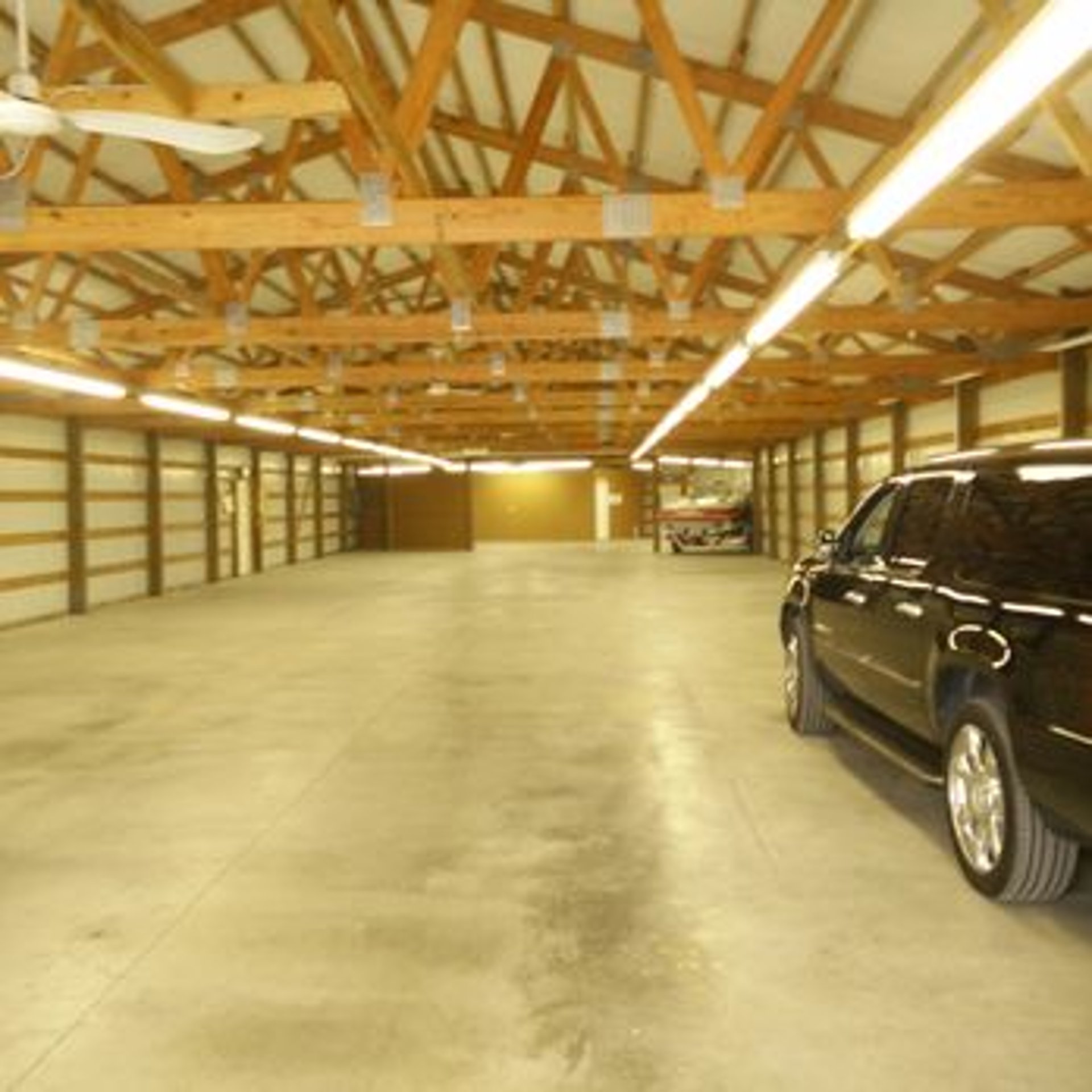
Indoor storage may be an individual enclosed unit or a shared building in which several boats and seasonal vehicles are positioned for the winter. A fully enclosed building keeps direct snow, freezing rain, sunlight, wind-blown debris, and most weather contact off the boat and trailer. It also avoids the need to depend on an exterior cover as the boat's main weather barrier.
“Indoor” does not automatically mean heated or climate-controlled. Ask whether a building is heated, insulated, humidity-controlled, or simply enclosed. Lake Geneva Boat Storage provides seasonal space inside an enclosed steel building with a concrete floor; we do not advertise the building as climate-controlled. Owners should still prepare their boats for Wisconsin winter temperatures.
Winterization is required either way
Storage location does not replace mechanical winterization. Water left in an engine, cooling system, plumbing line, livewell, bilge component, or other system can freeze even when the boat is inside an unheated building. Follow the boat and engine manufacturers' instructions for draining, antifreeze where appropriate, fuel treatment, oil and filter service, battery care, and moisture control.
Lake Geneva Boat Storage offers winterization—please inquire—but it is arranged separately from the storage price. Whether you choose indoor or outdoor space, confirm who is performing the work, what the service includes, and when it must be completed before storage.
Access can be as important as protection
Outdoor lots often leave more aisle room and may offer recurring access. Shared indoor seasonal buildings use floor space efficiently, which can mean boats are positioned closely and cannot be retrieved on demand. Neither arrangement is universally better: owners who need their boat in midwinter may value access, while owners who are finished for the season may prefer to leave it enclosed until spring.
Our Elkhorn facility is designed for one scheduled fall drop-off and one scheduled spring pickup. Boats and vehicles are not accessible during the winter season. Remove valuables and anything you may need before arrival, and review the complete seasonal schedule and preparation list.
Compare the total cost, not only the headline
An outdoor price may exclude shrink wrapping, cover inspection, trailer parking, winterization, or spring preparation. An indoor quote may be monthly, seasonal, or based on the full boat-and-trailer length. Compare each proposal from fall through spring and write down every required charge, including tax, deposits, cover work, and trailer fees.
Lake Geneva Boat Storage charges $36 per lineal foot of manufacturer boat length for the full six-month 2026–27 indoor term. Trailer storage is included free, and 5.5% county and state sales tax is additional. Enter the boat length in our seasonal price calculator to see the storage amount before submitting an inquiry.
Confirm size, surface, security, and insurance
Ask about the parking surface, drainage, lighting, gates, locks, facility procedures, and how owners are notified of a problem. Do not assume that any storage type includes insurance. Keep appropriate boat and trailer coverage active, photograph the boat before drop-off, remove valuables, and read the written storage agreement.
Indoor buildings also have fit and maneuvering limits. At our facility, qualifying boats may be up to 25 feet long and no more than 8 feet 11 inches in overall height while on the trailer. Width, trailer configuration, and final fit are confirmed before a reservation is accepted.
Side-by-side decision guide
Choose based on how you will use the space
- Consider outdoor storage when budget and recurring access outweigh direct-weather protection.
- Consider indoor storage when the boat will remain parked all winter and you want it out of direct snow, ice, wind, sunlight, and debris.
- Ask whether “indoor” means enclosed, heated, or climate-controlled; those terms are not interchangeable.
- Price the cover or shrink wrap, trailer space, winterization, tax, and full storage term—not only the advertised rate.
- Verify winter access rules before committing to a shared seasonal building.
- Complete mechanical winterization and maintain insurance regardless of storage type.
Indoor seasonal storage near Lake Geneva
Lake Geneva Boat Storage operates at 411 East Court Street in Elkhorn, Wisconsin, a short trip north of Lake Geneva. This is the physical storage facility, not a mailing address, and visits are by appointment only. The 2026–27 drop-off is Saturday, October 17, 2026, from 8:00 a.m. until noon sharp. Pickup is April 17, 2027, from 8:00 a.m. until 11:00 a.m. sharp.
To confirm fit and current availability, complete the short storage form, call 847-293-3402, or email delavanmarine@gmail.com.